
Your ACT Test Day Checklist for July 11: What to Bring, When to Arrive, and the Last 48 Hours That Actually Matter
The July 11 ACT is two days away. If you’ve spent the summer grinding through Science passages, English and Reading drills, and Math review, this is not the moment to start a new practice set. The scores that get left on the table this close to test day almost never come from a content gap — they come from logistics: a forgotten calculator, a mixed-up arrival time, an ID that doesn’t match the name on your admission ticket, or a Thursday night spent doom-scrolling instead of sleeping.
This is the checklist to run instead. No new content, no last-minute cramming — just the concrete, checkable items that determine whether all that prep actually gets to show up on the page Saturday morning.
What to Bring (and What Gets You Turned Away)
ACT test centers are strict about admission requirements, and “I forgot it at home” is not an exception they make. Lay these out tonight, not Saturday morning:
- Your admission ticket. Printed, not just pulled up on a phone — some centers will accept a phone version, but many will not, and you don’t want to find out which kind yours is at 7:45 AM. Print it.
- Acceptable photo ID. The name, photo, and signature must match your admission ticket exactly. A driver’s license, state ID, passport, or school-issued ID that meets ACT’s photo ID requirements all work. If your legal name recently changed, or if your school ID is expired, sort this out today — not at the check-in table.
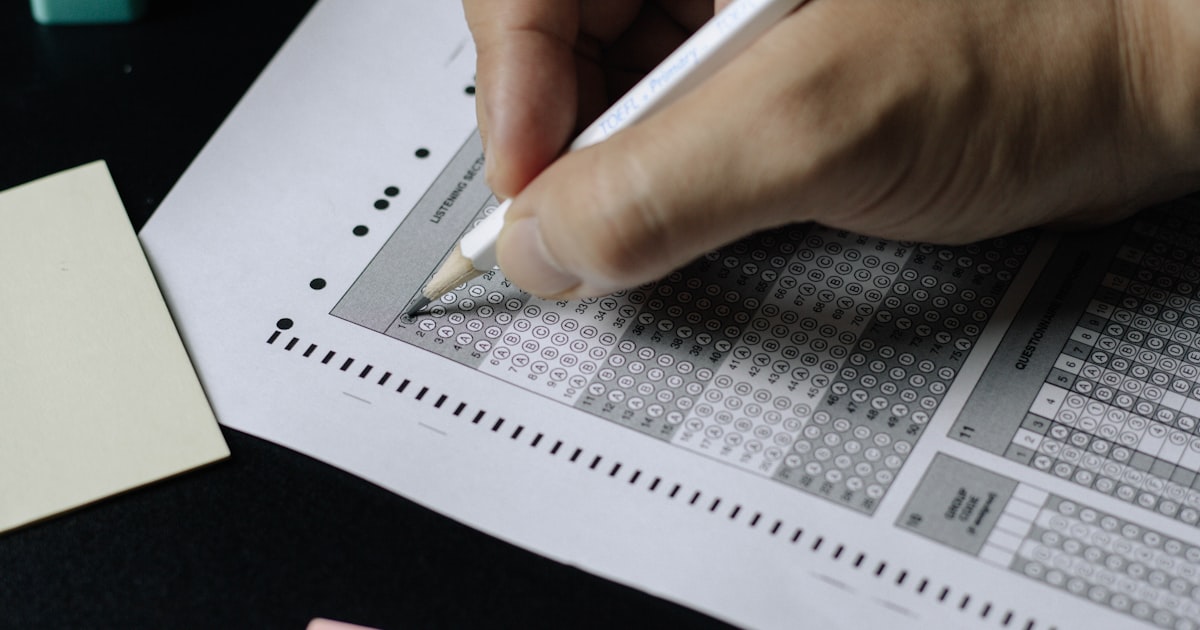
- Sharpened No. 2 pencils — several of them, not one. Mechanical pencils are not permitted for the answer document on paper administrations. Bring a separate eraser too; a pencil-top eraser that’s worn down is a bad time on a section where you second-guess an answer.
- An approved calculator, watch-battery-fresh, with any prohibited functions (CAS, wireless capability, QWERTY keyboard) cleared or confirmed absent. If you’re borrowing a calculator you haven’t personally tested this week, test it tonight. A calculator that resets its memory or won’t turn on is a Math section problem you don’t get to solve.
- A watch with no smart features — no alarms, no internet connectivity, nothing that beeps. Analog or basic digital only. Test centers usually have a clock, but a low-battery wall clock across the room is not pacing information you can rely on for a timed, adaptive section.
- A snack and a water bottle for the break. You will not be allowed to eat in the testing room, but there’s a scheduled break where a granola bar and some water make a real difference to focus in the second half of the test.
Leave the phone in the car if you can, or powered completely off and out of reach if you can’t. Phones are the single most common reason ACT invalidates a score after the fact — not because a student cheated, but because a phone was seen, heard, or even just accessible during testing. It is not worth the risk for a text you can answer at lunch.
When to Arrive (Earlier Than You Think)
Report time is typically 8:00 AM, and doors often close for late arrivals with no exceptions — not five minutes late, not “I was in the parking lot.” Plan to arrive by 7:30 AM at the latest, which means:
- Know your test center’s exact address and parking situation before Saturday. If it’s a school you’ve never been to, do a dry run today or tomorrow — Google Maps’ estimated drive time is not the same as knowing where student parking actually is at 7:15 AM.
- Build in 20–30 minutes of buffer beyond the drive time for parking, walking to the building, and finding your assigned room. Test centers often assign rooms alphabetically or by test type, and hallways get congested right at report time.
- If your center is unfamiliar or far away, this is the one week to over-plan the boring parts: gas in the car the night before, an alarm with a backup alarm, and clothes and materials laid out so morning decision-making is at a minimum.
If you know today that you’ll be late or unable to test, standby testing is not typically offered for a missed appointment — a missed test date usually just means rebooking a later administration, which costs both time and, depending on the change window, a fee. If anything about Saturday morning is uncertain (transportation, a schedule conflict, an illness building), address it today rather than hoping it resolves itself by Saturday.
The Enhanced ACT Format, One More Time
If this is your first Enhanced ACT (post-2025 format), the section order and timing differ from what old prep books and older siblings will tell you. Confirm, today, whether your registration is for the shorter Enhanced format (English, Math, Reading, with Science optional) or whether Science is included for you — this matters for how long you’ll be in the building and how many breaks to expect. Don’t guess based on what a friend took in the spring; formats and optional-Science elections are chosen per student at registration, and mixing up your own test structure the morning of is an unnecessary unknown to carry into a high-stakes room.
The Last 48 Hours: What Actually Moves the Score
With two days left, here is the honest ranking of what helps and what doesn’t:
Helps:
- Sleep, starting tonight — not just Friday night. Sleep debt from Wednesday and Thursday doesn’t get repaid by one good night before the test; two consecutive solid nights matter more than one.
- A light, familiar review — skimming your error log or formula sheet for 20–30 minutes, not a full timed section. The goal is confidence and recall, not new information.
- A normal Friday. Eat what you normally eat, keep your normal routine, and resist the urge to change your caffeine habits, diet, or exercise pattern right before test day. Test day is not the day to discover how your body reacts to something new.
- A test dress rehearsal for logistics only — pack the bag tonight, set out clothes, confirm the route, charge the (separate, non-phone) watch.
Doesn’t help — and can actively hurt:
- A full timed practice test on Thursday or Friday. At this point it mostly produces fatigue and, if it goes badly, unnecessary anxiety, without enough runway left to fix whatever it reveals.
- Learning new content or a new strategy two days out. If you didn’t already have a pacing system for Math or a passage-order strategy for Reading, Thursday night is not when you install one — go in with what’s already familiar rather than experimenting live.
- Caffeine or energy drinks beyond your normal amount “to be sharp.” A jittery, over-caffeinated 8:00 AM start is worse for sustained focus across a multi-hour test than your regular cup of coffee.
After the Bubble Sheet: A Quick Preview
You won’t get scores Saturday afternoon, and this isn’t the post for the full retake-and-superscore breakdown — that’s its own conversation once scores are actually out. But it’s worth knowing now, before you walk in, that this single sitting is rarely the only chance: most students planning for fall applications have at least one more testing window available before final deadlines, and colleges that superscore will combine your best section scores across attempts rather than requiring one perfect sitting. That fact alone is worth remembering at 10:45 AM if a section feels harder than expected — one rough section on one Saturday is a data point, not a verdict.
Quick Answers to Last-Minute Questions
Can I switch test centers if something comes up? Only through ACT’s own change process, and by this point in the week, options are limited and a fee usually applies. If a real conflict has come up, contact ACT directly rather than simply not showing up — a no-show can complicate future registrations more than a documented change does.
What if I’m sick Saturday morning? A registered but unable-to-test situation is handled differently than a no-show; check ACT’s current policy on illness and missed test dates before assuming you’ve simply lost the fee and the seat. Don’t push through a genuinely contagious illness just to avoid the hassle of rescheduling — it rarely produces a score worth keeping anyway.
Do I need to bring my own scratch paper? No — scratch paper (or a designated section in the test booklet, depending on your center’s format) is provided and must stay at the test center. Don’t plan around bringing your own; ask your proctor if you’re unsure what’s provided at check-in.
Is it too late to email my counselor with questions? No. If anything about your registration, accommodations, or test center assignment is unclear, a same-day email or call to your school counselor or ACT’s support line is far better than guessing and finding out you’re wrong at the check-in table.
What about accommodations testing? If you’re testing with extended time or other approved accommodations, confirm your specific room assignment and start time today — accommodated testing sometimes runs on a different schedule or location within the same building, and you do not want to discover that detail by wandering the halls Saturday morning.
The One-Page Version
If you only take one thing from this post, run through this list tonight:
- Admission ticket printed, photo ID matched to it exactly
- Calculator tested and battery-checked, several sharpened pencils and an eraser
- Non-smart watch, snack, and water bottle for the break
- Route and parking confirmed, alarm set for a 7:30 AM arrival
- Phone left home or fully powered off and out of reach
- Bed by a reasonable hour tonight and Friday — no new practice tests
Everything you did this summer — the Science passages, the pacing drills, the Verbal review, the Math strategy — gets to count on Saturday only if the logistics don’t get in the way first. Handle the boring stuff now so Saturday morning is just about the test.